









How Pyramid delivers
Federal IT, delivered differently
We don't slide decks. We ship the systems your mission depends on — under audit, on schedule, with the same engineers in year five as in year one.
Proven Results
Mission Success Our results speak for themselves. Through modern technology, agile delivery, and deep mission knowledge, we help federal agencies transform how they operate — and prove it with outcomes.
Mission Success
Is No Accident
Our results speak for themselves. Through modern technology, agile delivery, and deep mission knowledge,
we help federal agencies transform how they operate — and prove it with outcomes.



Securities & Exchange Commission
SEC Investor Data Modernization

Faster market data access
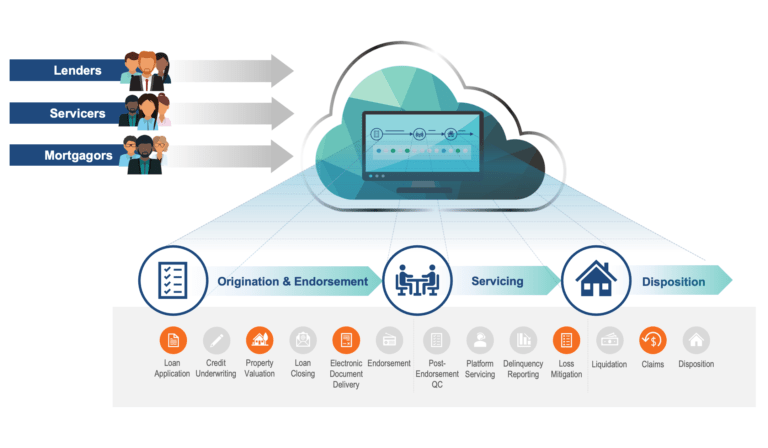
Transformed disparate legacy Microsoft Access applications into a unified low-code platform
Fully automated workflows
Digitized and automated numerous manual processes, accelerating investor information updates
How we deliver
From discovery to sustained operations
Federal IT modernization isn't a one-off project — it's a multi-year mission. We deliver in six phases, each gated on outcomes that matter to your stakeholders. Transparent, audit-ready, with the same team start to finish.
Discovery & mission alignment
We start with your mission outcomes, not just your technical requirements. We map agency stakeholders, existing systems, compliance constraints, and define success in terms your leadership cares about.
Architecture & compliance design
We design systems that satisfy your ATO from day one. Architecture decisions account for FedRAMP boundaries, FISMA controls, and your agency's specific authorization context — not retrofitted at audit time.
Build with federal engineering
Production code, federal-credible by default. CMMI-DEV Level 3 processes mean every commit is tracked, peer-reviewed, security-scanned, and tested before merge — auditable end-to-end.
Authorization & ATO acceleration
We package the artifacts your ISSO needs — SSP, SCA-R, POA&M, control evidence. Our ATO acceleration practices typically cut authorization timelines and shorten the path to production.
Deploy & federal operations
Deployment is the start, not the finish. We run production systems under your authorization, with continuous monitoring, FedRAMP-aware change management, and federally-credible incident response.
Continuous improvement
We don't ship and disappear. As your mission evolves, we evolve with you — adding capabilities, modernizing components, and tuning systems to keep pace with the work the agency actually does.
Federal procurement questions, answered
Frequently asked questions
Quick answers to the questions contracting officers and program managers ask before engaging us.
What contract vehicles can we procure Pyramid services under?
We hold prime positions on multiple federal contract vehicles, including GSA IT Schedule 70, GSA OASIS+ Unrestricted, HHS CMS SPARC, SEC ONE IT, GSA 8(a) STARS III, FDIC ITAS III Next Gen BOA, and HUD O&M BPA. Each vehicle covers a specific scope, agency-set, and procurement process.
For agencies not aligned to any of our vehicles, we partner with primes who hold those vehicles. The right answer depends on your agency, mission, and procurement timeline — talk to our contracts team and we'll route you to the fastest path to contract.
Which federal agencies have you delivered for?
Across thirty years of federal IT, our delivery footprint includes HUD (loan modernization, AMSS acquisition, mortgage claims), SEC (National Exam Program modernization, ONE IT contract vehicle), HHS / CMS (SPARC contract vehicle), USDA (WIC Food Delivery Portal), FDIC (ITAS III prime), USCIS (biometric interoperability), and additional civilian agency engagements.
We focus on federal civilian agencies — not because we won't pursue DoD work, but because civilian is where our 30 years of past performance lives. If you're a civilian agency program office, we likely have applicable delivery proof on file.
How do you handle ATO authorization and ongoing compliance?
ATO is built into our delivery approach, not treated as an afterthought.
We arrive with architecture decisions that anticipate FedRAMP boundaries, FISMA controls, and your agency's authorization context. From kickoff, we maintain the artifacts your ISSO will need — SSP, SCA-R, POA&M, control evidence, continuous monitoring outputs — so the authorization package is current rather than reconstructed at audit time.
We're independently appraised at CMMI-DEV and CMMI-SVC Maturity Level 3, hold the AWS Government Competency, and operate under audit at multiple federal agencies. Compliance posture is verifiable, not just claimed.
How does Pyramid handle long-term federal delivery vs. one-off project work?
We approach federal IT as a multi-year mission, not a transactional project.
Many of our engagements are 5-10+ years with the same federal customer — because federal modernization is iterative, and the agency's mission keeps evolving. Our team composition stays stable across that horizon: 100% employee-owned means our engineers stay invested in your outcomes rather than being pulled to the next account.
That said, we deliver tightly-scoped task orders too — Lab-style prototyping, one-time modernization sprints, ATO acceleration engagements. Whatever the duration, we deliver against outcomes your stakeholders can hold us to.
What makes Pyramid different from other federal contractors?
Three things federal buyers cite consistently in our engagements:
1. We ship. Production code, not slideware. The 17-month to 17-minute mortgage claims modernization at a federal agency is documented and verifiable — not a sales claim. We measure ourselves on systems in production, not contracts signed.
2. Employee-owned consistency. 100% employee-owned. Our engineers stay on your engagement — you won't get a different account manager every quarter. The team that wins your work is the team that delivers it.
3. Audit-credible compliance. CMMI-DEV / CMMI-SVC Level 3, AWS Government Competency, FedRAMP-aware delivery. Compliance posture is independently verified, not marketing-speak.
What does Pyramid's pricing model look like for federal work?
Federal pricing depends on the contract vehicle and procurement type — we deliver under T&M (time and materials), FFP (firm fixed price), and labor-hour arrangements depending on what the agency requires.
For new engagements, we typically start with a scoped task order (3-6 months) that demonstrates delivery before extending. For multi-year engagements, we structure base + option years matching the agency's planning horizon. Rate cards are GSA-approved where applicable.
For a specific pricing conversation, the right starting point is your contracting officer + program office — they know which vehicle and pricing structure fits your situation. We can route through your CO directly.
Does Pyramid focus on services delivery or also offer proprietary products?
Both — and the combination is intentional.
Services delivery is the core of our 30-year practice: modernization, cloud, cybersecurity, DevSecOps, and analytics & AI for federal civilian agencies. This is where most of our past performance lives and where most engagements start.
On top of that, we've productized AIR Platform — proprietary federal IT software including AIR-Quire (federal acquisition modernization, recently selected for HUD AMSS), AIR-Grant, AIR-Contract, and AIR-HR. AIR products can be procured as standalone SaaS or paired with implementation services. They're built on the same federal-credible engineering practices as our services work — production-ready, ATO-aware, audit-ready.
How does Pyramid stay current with federal AI, cloud, and cybersecurity policy?
Federal policy moves fast and we move with it.
Our solutions architects track the OMB AI memo, federal AI executive orders, FedRAMP revisions, FISMA updates, NIST SP 800-series control changes, and agency-specific compliance updates. We publish analysis of policy changes in our Insights — including recent coverage of the federal unbiased-AI executive order, AI workforce executive order, and federal permitting technology modernization.
Our Pyramid Labs R&D function prototypes responses to emerging mandates so we can deploy compliant solutions at the speed agencies need — not catch up six months after a policy lands. Our engineers hold relevant federal certifications (cleared staff available where required).