Unveiling Tech-Powered Philanthropy: The Pyramid Systems Hackathon
Pyramid Systems
04 December 2023
Reading time:
4 min.
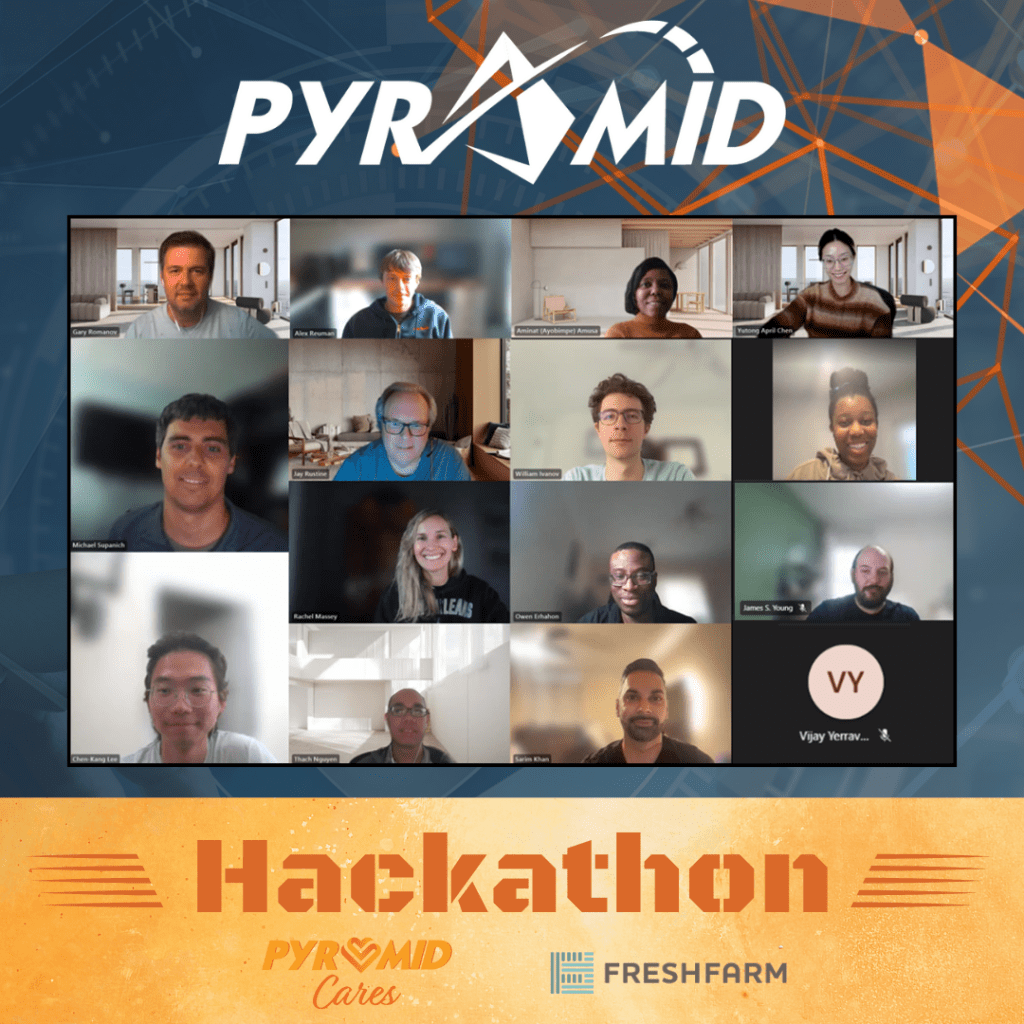
At Pyramid Systems, our commitment to technology extends beyond the boundaries of federal contracting. It also means making a positive impact in the neighborhoods where our employees live and work. Our annual hackathon is one of the most visible expressions of that commitment: a structured event where Pyramid technical talent is channeled into philanthropic projects for local non-profits and community partners.
This post is a celebration of the hackathon — what it produces, why we run it, and what it says about Pyramid's broader posture toward community impact.
What the Pyramid Hackathon Actually Is
The hackathon is a structured event — usually a weekend — where Pyramid employees self-organize into teams and work on technical projects benefiting non-profit and community partners. The pattern that's worked best:
Pre-event scoping with partners. Non-profit partners describe a real operational pain point in advance. Pyramid teams pick projects with realistic scope for a hackathon timeline.
Cross-team collaboration. Employees from different client engagements work together, often pairing skills that don't normally combine on day-to-day work.
Production-quality deliverables, not demos. The goal is something the non-profit can actually use — not a slide deck or a prototype that needs another six months to ship.
Lightweight handoff. Documentation, runbooks, and ongoing-support plans are part of each project, designed so non-profit partners can operate the result.
What Comes Out of the Hackathon
Past hackathon outputs have included:
Community dashboards for non-profits tracking program outcomes and donor reporting.
Volunteer-management tools for organizations coordinating large pools of community volunteers.
Donation-tracking and impact-reporting systems that automated manual spreadsheet workflows.
Mobile-friendly portals for community partners serving constituents who access services primarily by phone.
The throughline: each project replaces a manual, paper, or spreadsheet workflow with something a small non-profit team can actually operate without ongoing engineering support.
Why Pyramid Invests in Community Hackathons
Three reasons the event keeps running and growing each year:
Community impact. Local non-profits get production-quality technical work they couldn't otherwise afford. The downstream effect on the people those non-profits serve is real and traceable.
Employee development. Hackathon work exercises skills outside an employee's day-to-day engagement — new tech, new collaboration patterns, new constraints. Employees frequently say it's one of the most professionally rewarding things they do in a year.
Cultural reinforcement. Pyramid's commitment to people-first and community-investment posture isn't just rhetoric; it's a calendar event that puts the resources behind the words. The hackathon is part of how that posture stays visible to everyone in the firm.
Conclusion
Federal contracting is what Pyramid Systems does for a living. Community investment is part of why and how we do it. The hackathon is a small, concrete example of a bigger Pyramid principle: when you build a firm full of people who care about meaningful work, the meaningful work doesn't stop at the contract boundary. We're proud to keep running it, prouder of the non-profit partners who trust us with their challenges, and most proud of the Pyramid people who show up year after year to make it happen.
FAQ
What is the Pyramid Systems hackathon?
An annual structured event where Pyramid employees self-organize into teams to work on philanthropic technical projects for local non-profits and community partners. The goal is production-quality deliverables — community dashboards, volunteer-management tools, donation-tracking systems, mobile portals — that partners can actually operate.
Who participates in the hackathon?
Pyramid employees from across client engagements participate voluntarily, often in teams that combine skills and people who don't normally work together. Non-profit and community partners participate by describing real operational pain points in advance and supporting deployment after the event.
Do the hackathon projects actually get used?
Yes. The event is structured around production-quality deliverables rather than demos — with documentation, runbooks, and lightweight ongoing-support plans built in. Past projects have continued operating long after the weekend they were built in.
Why does Pyramid run a community hackathon?
Three reasons: tangible community impact for local non-profits that couldn't otherwise afford production technical work, employee development through cross-engagement collaboration on new tech and new constraints, and cultural reinforcement of Pyramid's people-first and community-investment posture.
Is the hackathon part of why I'd want to work at Pyramid?
For many of our team members it's one of the more visible reasons. Employees frequently describe it as one of the most professionally rewarding things they do in a year — alongside the federal mission work that defines their day-to-day.
Nexus: Innovating Connections for Growth and Opportunity at Pyramid
Inside Pyramid Nexus — our internal program that connects employees across teams, projects, and mentorship lines to drive innovation and career growth.